Debunking AAC Myths
Written By: Grace Lawton, M.A., R-SLP
Registered Speech Language Pathologist
Did you know that AAC supports the development of both speech and language? (American Speech-Language-Hearing Association, n.d.)
What Exactly is AAC?
The “What”?
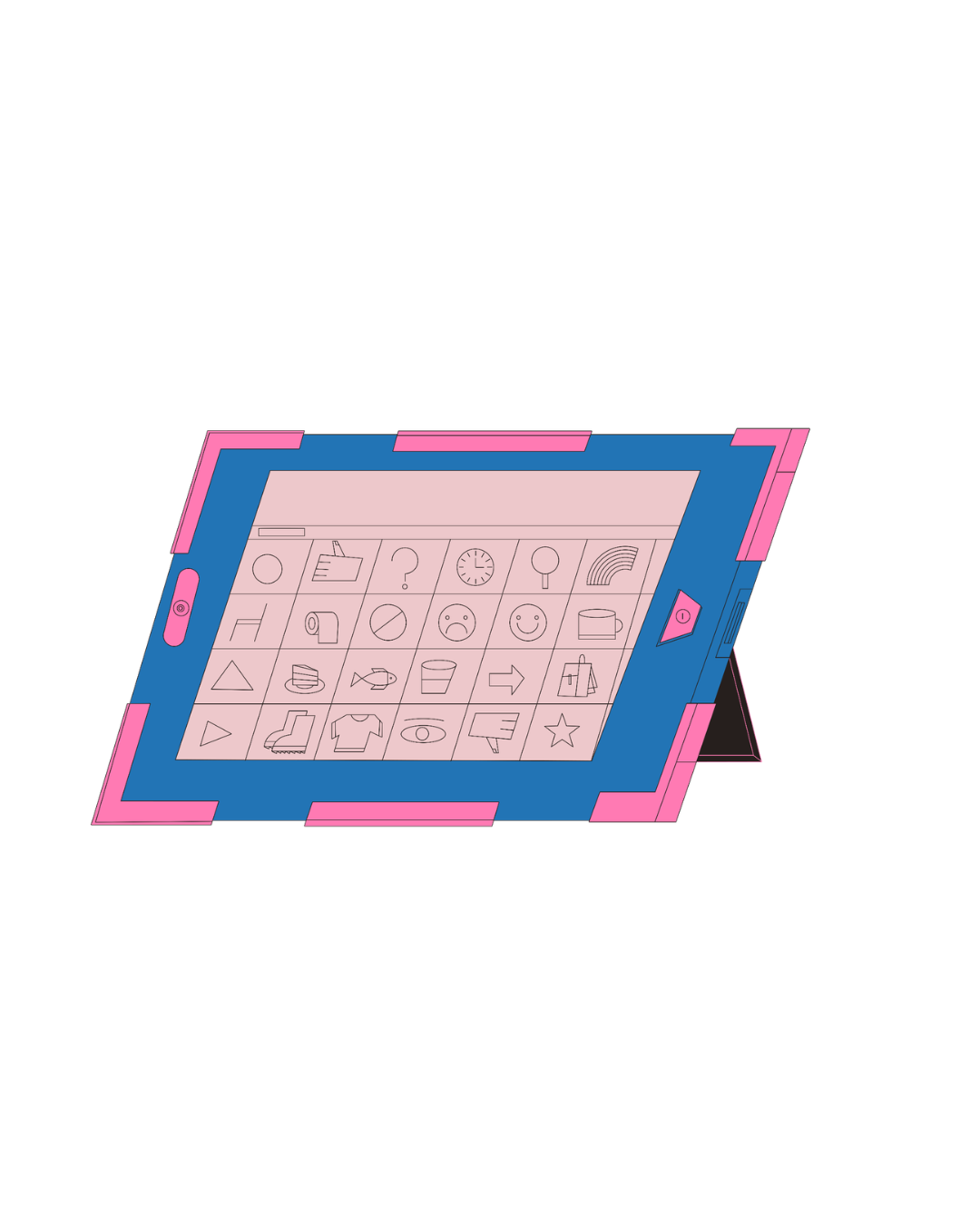
Augmentative and Alternative Communication (AAC) encompasses any supplemental or compensatory method of communication including, but not limited to, gestures, manual signs, line drawings, picture communication boards, letter boards, and speech-generating devices.
The “Why?”
Every child has the right to communicate. AAC is a tool that provides access to successful communication for those whose communication is limited or delayed.
Here at Ascend we believe that each child deserves:
To be given real choices
To say no/reject choices
To request wants and needs
To share thoughts and feelings
To be heard and responded to
To be spoken with, not about
To be taught how to communicate
To always have access to communication
AAC may help to supplement a child’s communication when they are tired. AAC may provide a consistent speech and language model for a child. AAC may provide functional communication to a non-speaking child or a child with limited spoken language.
Now that we are familiar with AAC, let’s clear up some misconceptions.
AAC Myths and Facts
Myth 1: AAC will impede my child’s speech development
Fact 1: AAC will support your child’s speech AND language development by providing and consistent model and access to new and functional vocabulary for your child to learn and use. It allows them to communicate successfully right away, rather than waiting.
Myth 2: There are cognitive prerequisites to use AAC successfully.
Fact 2: There are NO prerequisites for AAC use, and an AAC system is tailored to your child’s unique strengths and needs through a process called feature matching.
Myth 3: AAC is only for those who are non-verbal.
Fact 3: AAC benefits even those who use spoken language. It can help strengthen a child’s current speech and language skills, and may be beneficial during instances of fatigue, stress, or illness, to support a child’s communication.
Myth 4: AAC is only helpful for young children.
Fact 4: It is never too late to introduce AAC!
Myth 5: You must use low-tech AAC first.
Fact 5: You can use a high-tech speech-generating device from the start. Low-tech options such as communication boards or manual signs are helpful, but they may not work for everyone. A child does not need to master a low-tech option before being introduced to a high-tech speech-generating device.
Myth 6: Behaviour challenges need to be addressed prior to introducing AAC.
Fact 6: Behaviour serves a function. Children often demonstrate maladaptive behaviours as this is how they are able to easily communicate. AAC may help with behavioural challenges as it provides the child with a more functional method of communication.
Myth 7: AAC is not suitable for children with limited motor skills.
Fact 7: There is no prerequisite for use for AAC. There are many methods of accessing AAC, such as touch, eye gaze, and head tracking. An Ascend therapist can help find the right method of access for your child’s specific needs.
Myth 8: AAC should only be introduced as a last resort in therapy.
Fact 8: It is never “too soon” to introduce AAC.
My Child has an AAC system, how can I support them?
-
AAC is like learning a new language. Your child needs to be exposed to this new ‘language’, their AAC system, over and over, as they slowly begin to acquire the skills to communicate with it, expand their vocabulary, and navigate it. Use a combination of spoken language and AAC to model using it in daily routines, to support your child’s language development. We call this strategy aided language modelling.
-
Your child’s AAC system is their means of communication. Making sure your child always has access to their AAC system, their words, is the most important thing you can do. This looks like making sure their speech-generating device is always fully charged, sending their AAC system to school with them every day, making sure the charger goes with them in the backpack, and educating teachers and family members about the importance of providing constant access to the child’s AAC.
-
Children acquire language through being exposed to it, and using it. This is the same with AAC as a tool. Providing your child with opportunities to practice using their AAC system is simple yet so important. It can look like asking open-ended questions during a simple routine, such as while reading your child a book, during a game such as Go-Fish, or while giving them choices in daily-tasks such as morning or bedtime routines. At Ascend, we aim to make home-practice simple and practical, to promote successful home-carryover.
How can Ascend Help?
At Ascend, we believe that every child deserves a voice. Whether you are just beginning to wonder if your child may benefit from AAC, or looking to support your child and their current AAC system, our team is here to guide you every step of the way. We provide comprehensive speech and language assessment and intervention, tailored to your child’s unique strengths, functional needs, and interests. Our Speech-Language Pathologists can assist you in identifying the ideal communication system for your child. We also provide parent coaching, empowering you to implement your child’s AAC seamlessly into daily life, unlocking their communication potential.
Do you have questions regarding your child’s speech and language development? Please reach out to info@ascendpeds.com, and they would be happy to help!
References: American Speech-Language-Hearing Association. (n.d.). Augmentative and alternative communication (AAC). Practice Portal. Retrieved March 17, 2026, from https://www.asha.org/practice-portal/professional-issues/augmentative-and-alternative-communication/